
Why February Is the Most Important Booking Window for Mobile Bar Businesses
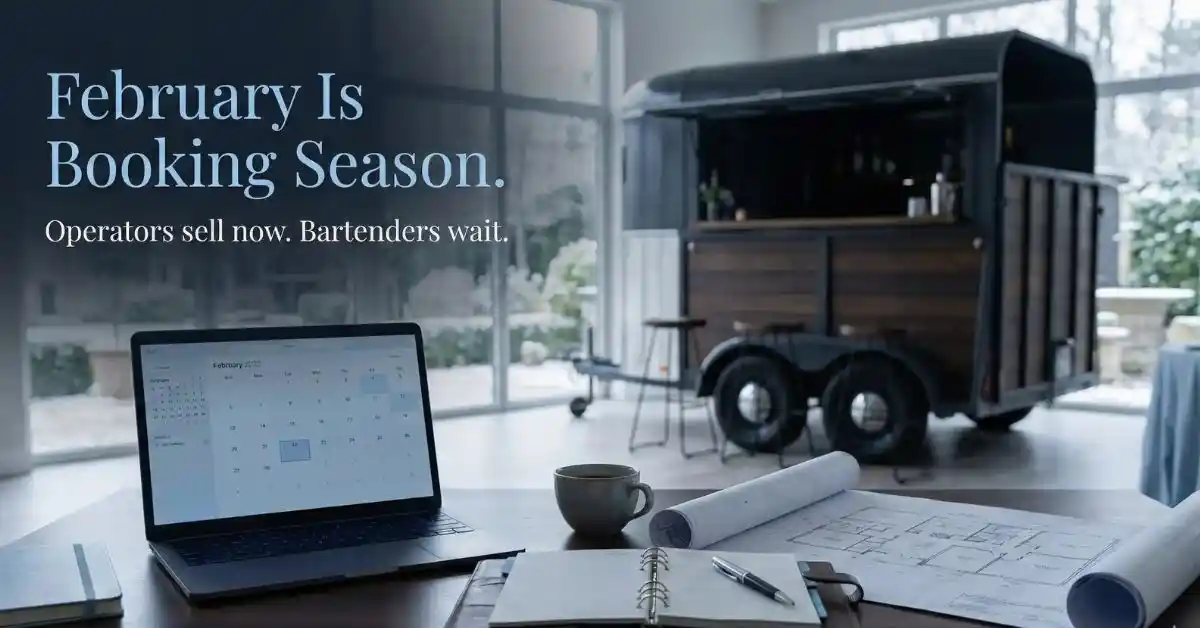
February can feel deceptively quiet. Your trailer isn’t rolling out every weekend. Your event calendar looks lighter than it will in May or June. But if you’re running a mobile bar business, that quiet is misleading, and treating it like downtime could cost you your entire spring revenue season.
Here’s what most operators miss: revenue doesn’t follow your event schedule. It follows the inquiry cycle. And February sits right in the heart of the decision window for spring weddings, early summer corporate events, and private celebrations like graduation parties. Serious buyers are narrowing their options and signing contracts right now.
This guide breaks down exactly what mobile bar operators should be doing in February to build a predictable, profitable year, not just a busy one.
February Is Booking Season, Not Execution Season
Mobile bar businesses operate on a delayed revenue cycle that most operators don’t fully account for:
- Q1 (January–March): Inquiries, vendor comparisons, and contracts
- Q2/Q3 (April–September): Execution and event delivery
If you only ramp up marketing when events are happening, you’re already 60 to 90 days too late. The operators who treat February like Booking Season are the ones whose spring calendars fill up. Those who treat it like downtime spend March scrambling.
6 Strategic Moves for Mobile Bar Operators in February
1. Follow Up Until You Get a Definitive Answer
Most vendors stop after one or two emails and assume the lead is dead. It usually isn’t, they’re just overwhelmed. January inquiries rarely go cold; they go silent. Build a follow-up sequence that moves through:
- An availability reminder (within 48 hours of initial inquiry)
- A check-in (“Are you still exploring options for your event?”)
- A value-add follow-up (share a relevant resource or package detail)
- A soft scarcity nudge (limited spring availability)
Revenue stability is built on follow-up discipline. Be the easiest vendor to say yes to.
2. Price for Profit, Not Out of Panic
February is not discount season. When you drop prices early to fill dates, you anchor your perceived value low, compress margins for your busiest season, and signal to clients that your rates are negotiable. Instead, price based on your actual costs, labor requirements, and required profit margin, not on anxiety about an empty calendar.
You don’t need to book every available date. You need to book the right ones at rates that make your business sustainable.
3. Build Referral Relationships with Venues and Planners
Venues and event planners are referral multipliers for mobile bar businesses, but they refer vendors who make their jobs easier, not vendors who pitch the hardest. What they actually care about:
- Clean, efficient load-outs that respect venue timelines
- Professional staff who don’t drink on the job
- Reliable communication before and during the event
Rather than generic networking outreach, ask venue coordinators directly: “What frustrates you most about bar service vendors?” Then position yourself as the solution.
When you remove operational friction for planners, referrals compound, without algorithm dependency.
4. Target Corporate Clients as Multi-Event Partners
Corporate event budgets are being approved right now. HR teams and operations managers are looking for efficient vendors they can count on repeatedly, not a one-time hire. Instead of pitching a single happy hour, position your mobile bar as:
- The quarterly company happy hour partner
- The annual offsite and retreat beverage program
- A multi-event solution tied to a single vendor agreement
One solid corporate relationship can generate more revenue than several small private events, with far less marketing overhead.
5. Publish Content That Pre-Sells Common Objections
February is not the time for generic seasonal posts. It’s the time to publish content that educates buyers and eliminates hesitation before they ever contact you. High-value topics to cover now:
- When to book a mobile bar for a spring or summer wedding
- What vendors couples should secure before shopping for bar services
- Why waiting until April often means paying more and having fewer options
- How dry hire vs. full-service models affect event budgets
Educate in February. Close in March and April.
6. Audit and Sharpen Your Scarcity Messaging
Scarcity is most credible before peak season becomes publicly obvious. In February, you can communicate limited spring availability without it feeling reactive. Review whether your website, inquiry responses, and social profiles clearly communicate:
- How many spring dates you have remaining
- What your typical booking lead time is
- What happens operationally when dates fill (waitlists, alternative dates)
Once May arrives and demand is visibly spiking, you’re reacting. In February, you can still lead.
What Mobile Bar Operators Should Avoid in February
The temptation during slower execution months is to either over-post on social media to “stay visible” or discount aggressively to fill dates. Both are mistakes. Posting without strategy wastes time. Discounting without reason erodes your brand and margin simultaneously.
The more costly mistake is confusing being busy with being profitable. February is for building the revenue structures that make spring profitable, not for filling time with activity that doesn’t convert.
Understanding the Inquiry Cycle vs. the Event Calendar
Events follow a calendar. Inquiries follow a cycle. The shift that separates high-performing mobile bar operators from those who constantly scramble is learning to market to the inquiry cycle, not the event calendar.
When you align your outreach, content, and follow-up to when buyers are actually deciding, typically 60 to 90 days before execution, your revenue becomes predictable.
That predictability is what separates bartender thinking from operator thinking.
February is quiet for bartenders. It is not quiet for operators.
Key Takeaways for Mobile Bar Businesses in February
- February is booking season for spring and early summer events, treat it accordingly.
- Follow up with January inquiries systematically; they’re rarely dead, just delayed.
- Price for profit and margin, not to fill every available date.
- Build venue and planner relationships by solving operational pain, not just networking.
- Position corporate clients as multi-event partners, not one-off bookings.
- Publish content that educates buyers and removes objections before they reach out.
- Use scarcity messaging now, while it’s still believable and proactive.
Related Posts
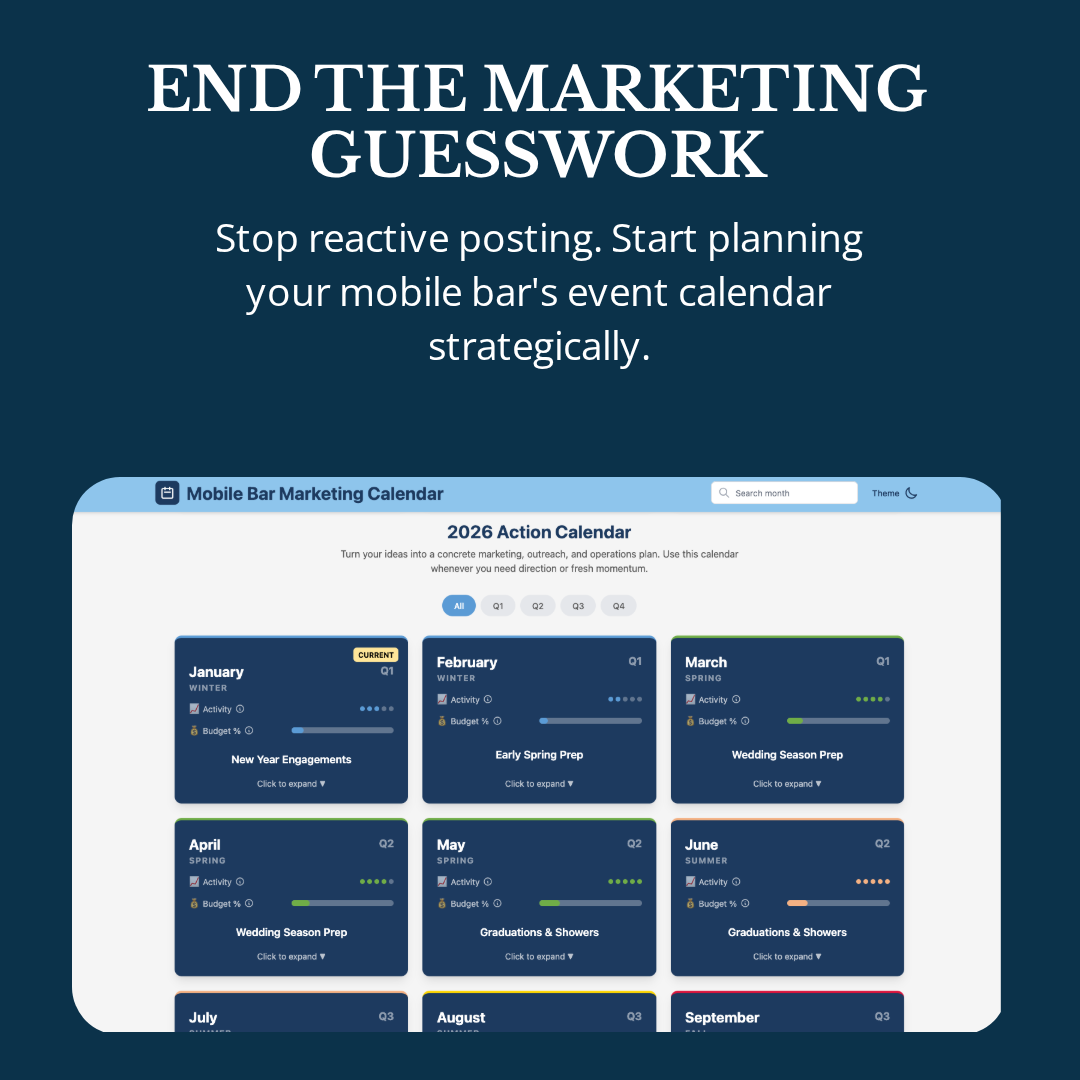
Mobile Bar Marketing January 2026: How to Attract Newly Engaged Couples
Mobile bar marketing in January looks different than any other month. While January can feel quiet for mobile bar owners,